

Table Of Contents: Golf Balls Buyer's Guide
Golf Ball 101
In golf, every detail matters. Ground conditions, weather, apparel, clubs, and golf balls are a handful of important variables that can impact your performance. The last of those variables, the golf ball, can profoundly impact your game. The modern ball is a product of many years of technological innovation. Every feasible aspect of the golf ball has been deconstructed and redesigned, increasing performance from the tee to the green. This ongoing research and innovation has completely redefined how a golf ball performs. They have been reconstructed with modern materials, layers, coverings, and even algorithmically selected dimple patterns.
As a result, today's golf balls perform better than ever before. The updated materials, designs, and construction have enhanced what the guaranteed best-priced premium options can do. Likewise, they are designed to offer various types of performance on the course. These design features improve distance, flight time, spin, and visibility. All these characteristics can improve games at different levels, even in the most challenging of situations on the course. Here is a breakdown of those features.
The Characteristics Of Modern Golf Balls
As with most golf equipment, technology and innovation have improved the golf ball. Below is an overview of today's modern golf ball and its many game improvement characteristics.
Layers
Believe it or not, technological changes to golf balls go back hundreds of years. In the early days, golf balls were made of animal hide and stuffed with feathers. As you probably expect, they would not work well in modern golf. As technology began to ramp up, things began to change. The introduction of rubber into the core revolutionized the golf ball. Additionally, the inclusion of new cover materials has altered ball performance in the air and on the ground. Pursuing a better golf ball would begin the scientific race to modify the ball's materials, structure, and composition.
Modern science took the research of golf ball layers to new lengths. Hence, new questions were asked that would change the game of golf forever. For example, what other materials could be modified in a golf ball to make it perform better, improving distance, spin, flight time, and compression dynamics? Asking this question spawned a second important question. Can multiple layers and materials be combined into the same ball to improve performance? The obvious answers were yes to both. New materials and multiple layers allow a golfer to do incredible things that can improve scores and allow for more consistency, hole after hole.
Dual-Layer
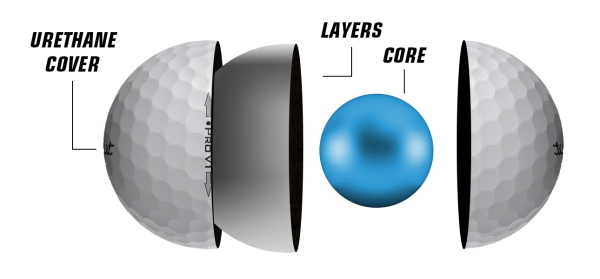
Dual-layer balls are the most common type of ball. A simple dimpled cover surrounds a single-piece core. This ball is designed for less experienced golfers and is built around a simple principle. Transfer as much energy as possible from the club to the core. The benefit is the greater distance.
Multiple Layers
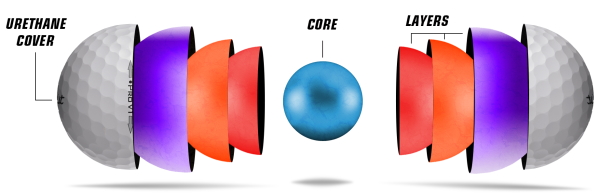
In contrast to the dual-layer ball, additional layers allow the ball to do more. Multiple layers alter the energy flow through the ball into the tightly compressed sphere. And this can help improve spin, control, and increase distance. And that increased distance can give a low handicap golfer an edge, allowing them more precision on the fairway.
Beyond Layers: Covers, Dimple Patterns, And Visibility
Cover Materials
Layers were only the beginning. The golf ball's cover opened the door to even more performance. The most common cover is a material called Surlyn. Manufactured by DuPont, it helps transfer energy effectively from the club to the ball's core. An alternate choice, though not the only one, is urethane. Alternate materials like urethane offer a different feel than Surlyn and can provide better spin and control. That often makes it popular with more experienced golfers. The cover material is not the only thing that can affect golf ball performance.
Dimple Patterns
Golf ball dimple patterns have an impact on performance as well. The layout of dimple patterns can alter the flight path of the ball. Manufacturers use machine learning to review which configurations result in better performance. But cover material and dimple patterns aren't the only ball cover improvements to consider.
High Visibility Golf Balls
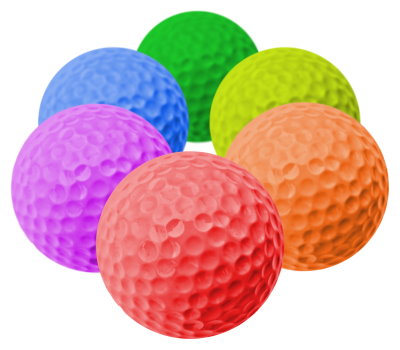
The color of a golf ball can also help you on the golf course. Ball layering technology, control, and distance are worthless if you cannot find your golf ball. High visibility colors are now a practical alternative to the traditional white golf ball. For example, orange balls work well and are easy to see in summer and winter. But because the leaves change color in the fall, orange golf balls might lose that visibility advantage. Different golfing conditions call for alternately colored golf balls.
Golf Ball Fitting
Using the best golf ball for your game can lower your score dramatically. So, getting a golf ball fitting at your local pro shop can be just as important as getting fit for your other golf equipment. After all, the humble golf ball is arguably the most essential piece of equipment in your bag. The golf ball can directly affect dynamics like launch angle, spin rate, and performance on the green, to name a few. Getting fit for the right ball can reduce the many variables working against you on the course. So, finding the right golf ball should be a top priority if you want to improve your game.
Buying Used Golf Balls
Used golf balls are a fantastic addition to your collection of equipment. They come in various grades for the serious or casual golfer and are excellent for novices or players simply searching for a great deal. Elite brands like Titleist, Callaway, TaylorMade, and others provide used golf balls at unbelievable costs. Plus, using used golf balls instead of new can be very eco-friendly! And we 100% stand by all of the used golf balls we sell!
Check out the Used Ball Process From Dirty To Delivered video here!
Read about and watch the video of Rock Bottom Golf processing used golf balls in-house to save you as much money as possible. Playing used and recycled golf balls is budget-friendly, especially when purchasing from RBG! Play premium performance golf balls for less.
Click on the used golf ball categories below to find out more!


Golf Balls Designs And Layers

Two-Layer Golf Balls
One of the most common golf ball designs consists of a two-piece construction. Combining a large core with a cover can deliver results regardless of the simplicity. The large solid core can help provide distance without spin. Because these balls have less spin, they are often a better choice for less experienced golfers. Many offer a soft compression core designed for players with a slower swing. A great example of this ball is the Callaway Supersoft Golf Ball.
Callaway Supersoft Golf Balls
The Callaway Supersoft Golf ball offers incredible distance. The Hyperelastic Softfast Core is designed to focus the power of your swing into the center of the ball. Even players with a slower swing can achieve great shots with this ball. You will immediately notice the soft feel this ball offers on every swing, allowing you to amplify your game.
Three-Layer Golf Balls
For intermediate players with lower handicaps, the move from a two-piece ball to a three-piece ball might open up additional options on the fairway. Beyond just the power derived from a two-piece construction with a large core, the extra layer adds some new functionality. An added layer can provide more rigidity to the ball. And this can add spin to the ball, giving more control on many shots. A great example of this type of ball is the Titleist Pro V1 Ball.
Titleist Pro V1 Golf Balls
A great example of a three-layer golf ball is Titleist Pro V1. This ball efficiently uses the different layers to deliver a combination of distance, spin control, and feel. Inside, a new high gradient core serves as the primary engine for fast speed and low long game spin, which improves performance from the inside out. For more control, the high flex casing layer helps to mitigate spin on longer shots but helps enhance speed. For shorter shots on or near the green, the outer casing offers spin and control to help you stay under par.
Four-Layer Golf Balls
A four-piece golf ball is perfect for intermediate to advanced players with very high swing speeds. A four-piece ball features all the benefits of a two-piece and three-piece ball, but the four-piece construction adds a new element. That element is an enhanced core. A great example of this type of ball is the Srixon Z-Star XV Golf Ball.
Srixon Z-Star XV Golf Balls
The Srixon Z-Star XV Golf Ball features a proprietary fast-layer core. This core is designed to be soft at the center but gradually increases in rigidity at the extremities of the core. The result is a ball that can give you explosive speed and distance off the tee, with greenside control and spin. This ball certainly is not for everyone. It can be a game-changer for a player with above-average shot accuracy and a fast swing speed.
Five-Layer Golf Balls
Considering the incredible functionality of a four-piece golf ball, why add another layer? The answer is that the additional layer adds a new level of versatility to the four-piece golf ball. The extra layer offers extra spin, control, and distance with certain clubs. However, a less experienced player may only be able to unlock some of the flexibility in this ball. For those that can, it can help you make shots that may not have been possible with other golf balls. A great example of this technological marvel is the TaylorMade TP5 Golf Ball.
TaylorMade TP5 Golf Balls
The TaylorMade TP5 Golf Ball offers many benefits with its 5-layer design. The layers have been designed to enhance almost every stage of the ball's path. Four progressively firmer inner layers and an aerodynamic cover design offer explosive speed off the drive but with spin and control. Even with five layers, the ball is still designed to flex, improving power during contact. As you move to the green, the cast urethane cover is designed for better groove interaction to help you make better short-game shots. TaylorMade also offers the firmer TP5x for players with higher swing speeds who want a lower ball flight and more distance off the tee.
A Custom Layer?
Why not add your own layer to your golf balls? Custom golf ball personalization adds a printed layer to the outside of your golf ball. We can customize the message on your favorite brand-name balls, and they make a perfect gift for the golfer in your life.
Personalize Your Golf Balls!
Add Custom LOGOs To Your Golf Balls!
Golf Ball Frequently Asked Questions
1. What are the best golf balls for beginners with slower swing speed?
Beginners with slower swing speeds should look for golf balls that offer maximum distance and forgiveness. Low-compression golf balls, such as the Callaway Supersoft or the Titleist Tour Soft, are excellent choices. These balls compress more easily, which helps generate more distance and reduces spin for straighter shots.
2. How do I choose the best golf balls for improving distance?
To improve distance, consider golf balls with a lower spin rate and higher compression. Balls like the TaylorMade TP5x and the Bridgestone E6 are designed to reduce spin and increase velocity, helping your shots travel farther. Look for features like aerodynamic dimple patterns and multi-layer construction to enhance your distance.
3. What type of golf balls should seniors use for enhanced control and feel?
Seniors often benefit from using low-compression golf balls that provide a soft feel and enhanced control. The Srixon Soft Feel and Wilson Duo Soft+ are popular choices. These balls are designed to help maximize distance while maintaining a soft feel around the greens, which can be particularly beneficial for senior players.
4. Are there golf balls designed specifically for women?
Yes, there are golf balls designed specifically for women. These balls generally have a lower compression to accommodate slower swing speeds and offer a softer feel. The Callaway Ladies REVA and TaylorMade Ladies Kalea are excellent examples, providing both distance and control tailored to women golfers.
5. What are the benefits of using high-visibility golf balls?
High-visibility golf balls, available in bright colors like yellow, orange, and green, are easier to spot on the course. This can save time and reduce frustration from losing balls in the rough or fairway. Additionally, these balls can help improve focus and concentration, making it easier to track shots in various light conditions.
6. How does the construction of a golf ball affect its performance for intermediate players?
The construction of a golf ball significantly impacts its performance. For intermediate players, multi-layer balls like the Titleist Pro V1 or Bridgestone Tour B RX offer a balance of distance, control, and feel. The core, mantle, and cover materials work together to optimize performance, providing enhanced spin control around the greens and more distance off the tee.
7. What are the differences between urethane and Surlyn covers on golf balls?
Urethane covers are typically found on premium golf balls and offer better spin control and a softer feel, making them ideal for advanced players looking to enhance their short game. Surlyn covers, on the other hand, are more durable and provide less spin, which can be beneficial for beginners and high-handicap players seeking more distance and forgiveness.
8. How often should I replace my golf balls?
Golf balls should be replaced based on their condition and performance. If a ball shows visible wear, cuts, or scuffs, it's time to replace it. For regular players, changing balls every few rounds or after a significant impact can help maintain consistent performance. Keep in mind that even if a ball looks fine, its performance can degrade over time.
9. Can premium golf balls really improve my game, and are they worth the cost?
Premium golf balls can improve your game, especially if you're an intermediate or advanced player. They offer superior construction, better materials, and advanced technology that can enhance distance, control, and feel. However, for beginners, the benefits may not justify the higher cost, and using more affordable balls might be a better choice until your skills improve.
10. What are the best golf balls for players with a high handicap?
High-handicap players should look for golf balls that provide maximum forgiveness and distance. The Bridgestone E12 Contact and the Titleist Velocity are great options. These balls are designed to minimize spin and reduce hooks and slices, helping high-handicap golfers achieve straighter, longer shots.
The Main Takeaway?
Golf balls are essential to your golf game. So it's essential that you are using the correct golf ball for your playing style. There are many different options to choose from, so knowing what works best for you can make it easier to keep your score as low as possible. Playing used golf balls is a great way to try out the more expensive brands to see what works best for you. And buying used is also an excellent way to make playing golf more economical. So, whether you are playing new or used golf balls, make sure they are right for you.
Get Your Golf Balls At The Best Price, Guaranteed!
Shop golf balls at Rock Bottom Golf and you are guaranteed the best price on the internet. We will match anyone's price, we run golf ball sales constantly, and qualifying orders get Free Home In 2 shipping. Check back often for the lowest prices on premium new and used golf balls.
Golf Ball Glossary: Common Terms Explained
Golf ball packaging is full of specs and marketing language. Here is a plain English breakdown of the terms you will run into while you shop.
- Alignment Aid
- A printed line, arrow, or graphic on the cover that helps you aim your putts and set your ball up on the tee. Examples include Callaway Triple Track, Titleist AIM, and TaylorMade ClixPix.
- Ball Speed
- How fast the ball leaves the clubface after impact, measured in miles per hour. Higher ball speed tends to produce more distance, assuming your launch and spin are in a reasonable window.
- Compression
- A number (roughly 30 to 110) describing how much the ball deforms at impact. Lower compression balls feel softer and are often paired with slower swing speeds. Higher compression balls tend to suit faster swings.
- Conforming Ball
- A ball that meets USGA and R&A limits for size, weight, initial velocity, and overall distance. Conforming balls are required in tournament play. Novelty and practice balls usually are not conforming.
- Core
- The rubber center of the ball and the main engine for speed and distance. Some cores are a single density throughout, while others get progressively firmer from the center outward.
- Cover
- The outer skin of the ball. Cover material drives greenside spin, feel, and durability more than almost any other single component.
- Dimple Pattern
- The number, depth, shape, and layout of the dimples on the cover. The pattern manages lift and drag, which shapes how high the ball climbs and how it holds its line in wind.
- Driver Spin (Long Game Spin)
- Backspin generated off the tee and with long clubs. Too much can cost you distance and exaggerate a slice or hook, so most distance focused balls are built to keep it down.
- Feel
- The sound and sensation at impact, especially on putts and short shots. Feel is subjective, so two golfers can describe the same ball differently. It is worth testing rather than reading about.
- Greenside Spin (Short Game Spin)
- Backspin on wedges, chips, and pitches. More greenside spin can help the ball check up and stop closer to the pin. This is where premium urethane covers earn their price.
- Ionomer (Surlyn)
- A firm, cut resistant cover material found on most value and distance balls. Surlyn is DuPont's brand of ionomer. It holds up well to mishits but produces less greenside spin than urethane.
- Launch Angle
- The angle the ball leaves the clubface relative to the ground. Ball construction can nudge launch a few degrees higher or lower, which changes carry distance and how the ball lands.
- Mantle (Casing Layer)
- One or more layers sandwiched between the core and the cover. Mantle layers let designers separate long game and short game behavior, which is why three, four, and five piece balls exist.
- Recycled vs Refinished
- Recycled balls are played balls that have been collected, cleaned, and graded, with the original cover intact. Refinished balls have been stripped and repainted, which can alter performance.
- Spin Rate
- How fast the ball rotates in flight, measured in revolutions per minute. There is no universally good number. What you want depends on the club in your hands and the shot you are trying to hit.
- Urethane
- A softer cover material used on tour level balls. Urethane grabs wedge grooves for more short game spin and a softer feel, though it tends to scuff more easily than ionomer.
The Best Golf Balls For 2026
Take a look below at some of the best golf balls for 2026. These modern golf balls take advantage of all the best manufacturing techniques to bring you the most technologically advanced golf balls today.
Last updated: