


Last updated:
Table Of Contents: Golf Hybrids Buyer's Guide
What Hybrid Golf Club Should You Buy?
The right hybrid is the one that creates consistent distance spacing in your bag. Rather than buying a hybrid because its number matches an iron you want to replace, test or get fit for one that fills a real yardage gap, whether that is in place of a long iron you struggle with or in the slot between your shortest fairway wood and your longest iron. For many golfers that lands somewhere around 19 to 25 degrees, but your own carry distances should make the final call.
Hybrids have been around in some form for decades, but they went mainstream in the 2000s once golfers realized how much easier they were to hit than long irons. Today you will find them in the bags of beginners and tour players alike, and many game improvement iron sets now ship with hybrids already built in.
Key Points
- Hybrids blend a fairway wood's forgiving head with an iron's length and loft, which helps many golfers launch long approach shots higher and more consistently.
- Buy for distance spacing, not the number on the sole. Loft, shaft length, head design, and how you deliver the club all affect how far a hybrid actually goes.
- Hybrids can replace long irons you struggle to hit, or fill the gap between your fairway woods and your longest iron. Beginners often carry 2 to 4, while better players may carry 1 or none.
- Test or get fit before you buy, so your new hybrid lands cleanly between the clubs above and below it.
- Certified pre-owned hybrids get you name-brand performance for less, backed by a 30-Day Playability Guarantee.
What Is A Hybrid Golf Club?
A hybrid (sometimes called a rescue or utility club) is designed to deliver the distance of a long iron with the launch and forgiveness of a fairway wood. Because it combines features of both, it can be useful in a wide range of situations: off the tee on tight par 4s, from the fairway on long par 3s, out of the rough, and even for bump and run chips around the green.
At first glance a hybrid looks like a small fairway wood. The head is larger than an iron but more compact than a wood, and the shaft is usually shorter than a fairway wood's and slightly longer than the iron it replaces. That shorter shaft is a big part of why many golfers find hybrids easier to control than a fairway wood of similar distance.
Why Hybrids Are Easier To Hit

The advantages of a hybrid come from its head design. Compared to a long iron, a hybrid typically offers the following. None of these guarantee better accuracy for every player, but they help many golfers hit more consistent long shots.
- A lower, deeper center of gravity. Weight sits low and further back from the face, which helps get the ball airborne without a perfect, descending strike.
- More forgiveness on mishits. The larger head raises the club's moment of inertia (MOI), so it twists less on toe and heel strikes, so off-center shots tend to stay straighter and lose less distance.
- A wide, smooth sole. Instead of digging into thick rough or tight lies like the sharp leading edge of an iron, the sole glides through the turf.
- A steeper landing angle. Higher launch means the ball comes down more vertically and stops faster, which can make greens easier to hold than with a low, running long iron.
Hybrid Lofts And Approximate Iron Equivalents
The number stamped on a hybrid's sole is only a label. Loft, shaft length, head design, and how you deliver the club at impact all matter more than that number, and lofts vary from brand to brand. Use the chart below as a rough starting point only. Two golfers with the same hybrid can see very different carry distances, so confirm your actual numbers on a launch monitor or at a fitting before you buy.
Approximate lofts and replacements. Actual specs vary by manufacturer and model.
| Hybrid | Approx. Loft | Often Replaces |
|---|---|---|
| 2 Hybrid | 16 to 18 degrees | 2 iron or 5 wood |
| 3 Hybrid | 19 to 20 degrees | 3 iron |
| 4 Hybrid | 21 to 23 degrees | 4 iron |
| 5 Hybrid | 24 to 26 degrees | 5 iron |
| 6 Hybrid | 27 to 29 degrees | 6 iron |
| 7 Hybrid | 30 to 32 degrees | 7 iron |
Modern iron sets have stronger lofts than they did a decade ago, so your 5 iron may already be 22 or 23 degrees. A hybrid also usually has a longer shaft than the iron it sits next to, so it can fly farther than its loft alone suggests. Compare your current carry distances before picking a hybrid, or you could end up with two clubs that go the same distance.
Hybrids vs. Long Irons vs. Fairway Woods
Hybrids are most often used to replace long irons, but some golfers also use them to fill the distance slot between their shortest fairway wood and their longest iron. Which club works best depends on your swing and the shots you face, so treat the comparison below as general tendencies rather than rules:
| Long Iron | Hybrid | Fairway Wood | |
|---|---|---|---|
| Launch | Low, penetrating | High | Mid to high |
| Forgiveness | Lowest | High | High |
| From the rough | Difficult | Often easier | Fair, larger head can snag |
| Shot shaping | Easiest to work | Moderate | Moderate |
| Best for | Fast swingers, windy conditions | Most golfers, long approaches | Distance from the tee and fairway |
Golfers use hybrids in a few common ways:
- Replacing a long iron. Swapping a 3 or 4 iron you struggle to hit for a hybrid that covers a similar distance.
- Filling a gap. Adding a hybrid between your shortest fairway wood and your longest iron when there is too big a yardage jump between them.
- Playing a combo set. Using hybrids for the longer clubs and traditional irons for the mid and short clubs.
If you already hit your 5 iron well but struggle with the 4, one hybrid is often enough.
How To Choose The Right Hybrid
Once you know the loft you need, these specs will narrow down which model fits your game:
Head Shape And Bias
Larger, rounder heads with weight toward the heel promote a draw and inspire confidence for players who fight a slice. Smaller, more compact heads with a flatter face look more like an iron at address and suit players who want a neutral ball flight and more workability.
Shaft Weight And Flex
The shaft has as much to do with ball flight as the head. A shaft that is too stiff tends to produce low, weak shots, while one that is too soft can balloon or hook. Most stock hybrid shafts are graphite in the 60 to 85 gram range. Faster swingers who want a hybrid to feel like their irons sometimes choose a heavier shaft.
Adjustability
Many current hybrids have an adjustable hosel that lets you change loft by a degree or two and tweak the face angle. That flexibility makes it much easier to dial in your gapping after you buy.
Gapping (The Most Important Step)
Gapping means keeping consistent distance spacing between clubs, and it matters more than any other factor on this list. Before buying, note how far you carry the iron below and the wood above the hybrid's spot in your bag. The right hybrid lands in the middle of that range, usually around 10 to 15 yards from each neighbor. The best way to confirm that is to test hybrids on a launch monitor or get fit, rather than buying one because its number matches the iron you are replacing.
How Many Hybrids Should You Carry?
There is no universal rule. The right number depends on your swing speed, your confidence with long irons, and the shots your home course demands. A simple guideline is to replace any iron you cannot hit consistently. Here is a general breakdown by skill level.
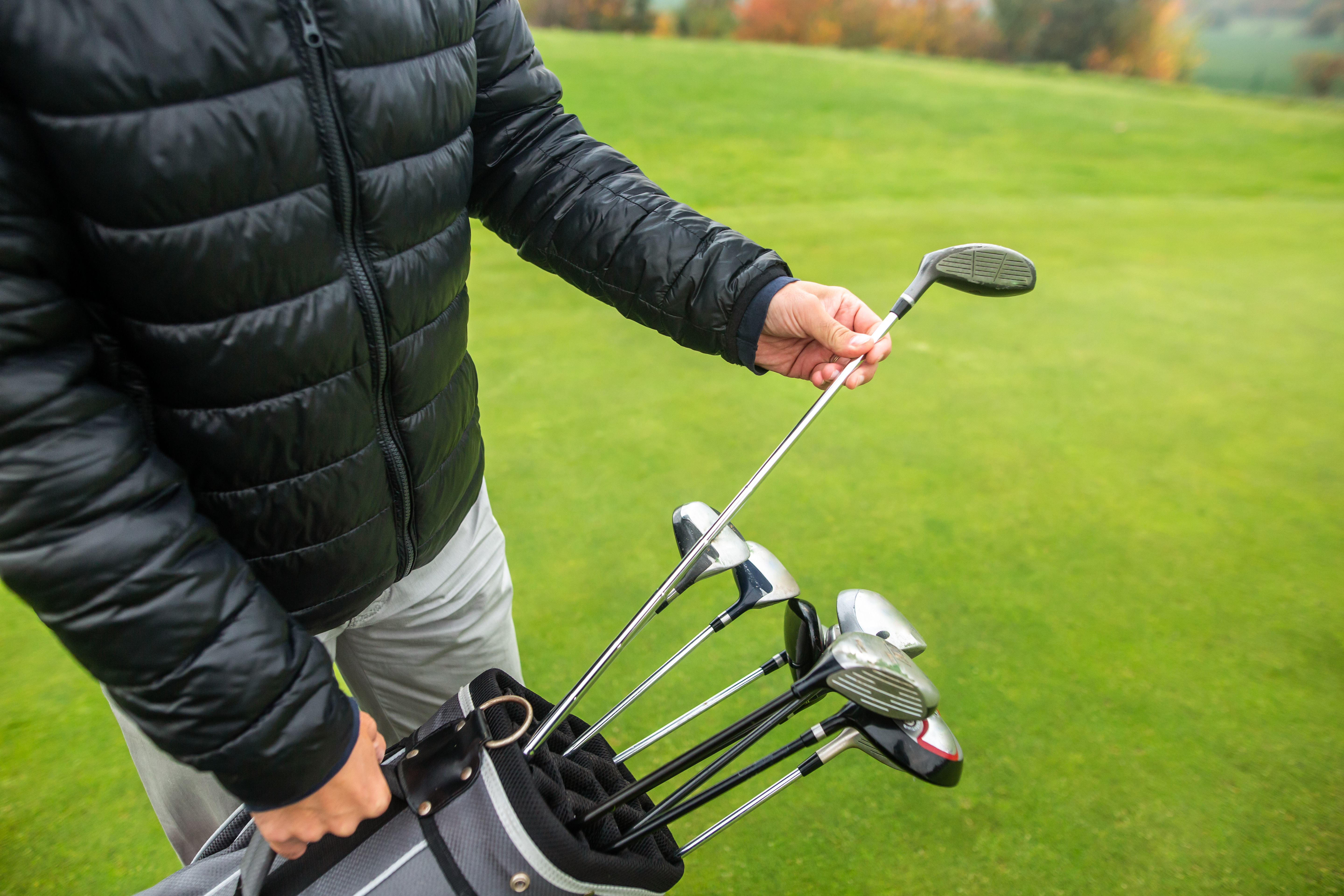
Beginner Or High Handicap Golfers (2 to 4 Hybrids)
Newer players, slower swingers, and anyone who struggles to get long irons airborne will get the most out of hybrids. Replacing the 4, 5, and even 6 iron with hybrids can build confidence quickly and make long approach shots far more playable.
Intermediate Golfers (1 to 3 Hybrids)
As ball striking improves, you may hit your mid irons well but still find the 4 or 3 iron inconsistent. One or two hybrids to cover those yardages is usually plenty, and they often become your go-to clubs on long par 3s and second shots into par 5s.
Low Handicap Or Expert Golfers (0 to 1 Hybrid)
Players with high swing speeds can usually generate enough height and spin to control long irons or a driving iron, and some prefer that lower, more penetrating flight in the wind. Even so, many skilled players carry a single hybrid for courses that call for high, soft-landing long approaches.
Hybrid Club Customization
Many new hybrids can be ordered with custom specs like shaft, flex, length, lie angle, and grip. If you want a hybrid built for your swing, check out the customizable hybrids at Rock Bottom Golf.
Shopping for someone specific? Browse left-handed hybrids and ladies' hybrids.
Certified Pre-Owned Hybrids
Buying pre-owned is one of the easiest ways to save on a name-brand hybrid. It also makes it less costly to try a few different heads and lofts until you find the one that fits your bag, since the hybrid a tour pro plays is not necessarily the right one for you.
Our certified pre-owned hybrids are inspected and condition rated by our pre-owned club experts. Eligible clubs are backed by our 30-Day Playability and Condition Guarantee and a 12-month limited warranty.
Shop pre-owned hybrids by condition


Hybrid Golf Club FAQ
What iron does a 4 hybrid replace?
A 4 hybrid is often used in place of a 4 iron and is commonly around 21 to 23 degrees, but that is only an approximation. Loft, shaft length, and head design vary by brand, and the same hybrid can fly differently for different golfers. Compare carry distances, not just the number on the club, before you buy.
Do hybrids go farther than irons?
Often, but not always. Many amateurs carry a hybrid a bit farther than a long iron of similar loft because it launches higher, has a slightly longer shaft, and loses less distance on mishits. Faster swingers may see little difference on solid strikes. Testing both is the only way to know for your swing.
Should I hit a hybrid like an iron or a fairway wood?
Most golfers do best swinging a hybrid more like an iron, with the ball a little forward of center and a slightly descending strike. Trying to sweep it like a fairway wood or scoop it into the air often leads to thin or topped shots.
Is a hybrid or a 7 wood better?
It depends on the player. A 7 wood generally launches higher and lands softer, while many golfers find a hybrid of similar loft easier to control and more versatile from the rough. If you need maximum height, try the 7 wood. If you want versatility from different lies, a hybrid is often a good fit. Hitting both side by side is the best way to decide.
Are pre-owned hybrids a good buy?
Yes. Hybrids hold up well over time, and a well-rated pre-owned hybrid from a reputable seller performs like new at a lower price. Rock Bottom Golf condition rates every certified pre-owned club and backs eligible clubs with a 30-Day Playability and Condition Guarantee.
The Main Takeaway
For many golfers, a hybrid is one of the simplest equipment changes that can make long shots more consistent. The most important thing is not which number is on the club, but whether it creates even distance spacing in your bag. Identify the yardage gap you need to fill (a long iron you struggle with, or the jump between your fairway woods and irons), then test or get fit for a hybrid that covers that distance with a shaft that suits your swing. Buy it for the gap it fills, not for the iron number it matches.
Best Hybrid Clubs For 2026
Today's hybrids go well beyond the basics, with adjustable hosels, movable weights, faster face materials, and shaft options for every swing speed. Here are some of the most popular hybrid clubs from top golf manufacturers.